We offer high-precision CNC turning to create custom cylindrical and rotational parts for prototyping and high-volume production.
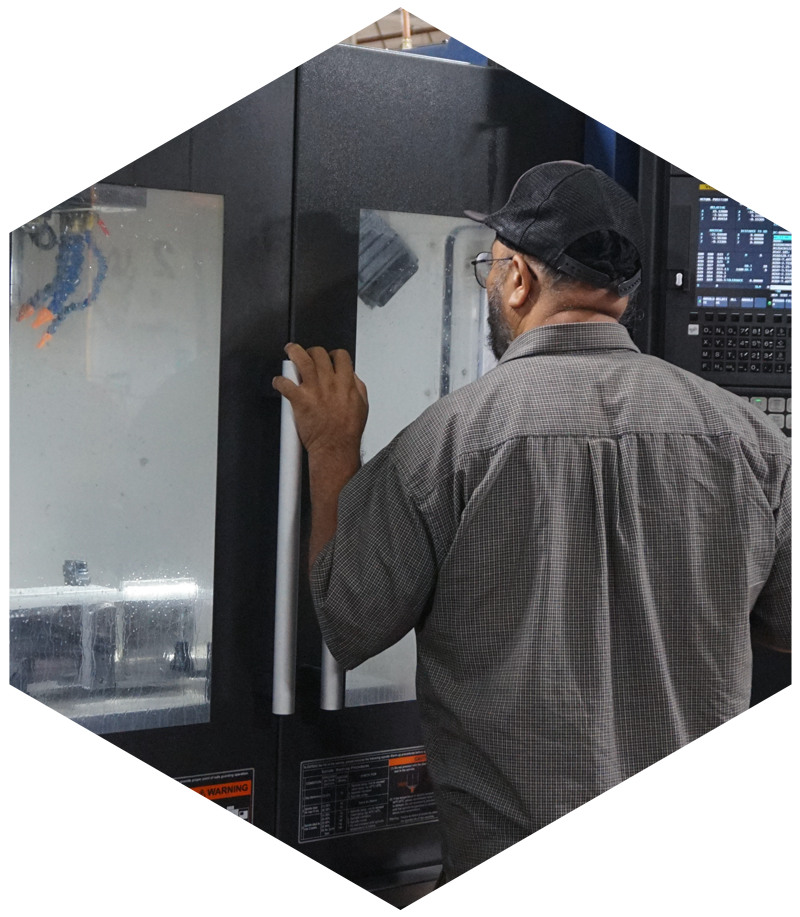
Our CNC Turning services are driven by new, state-of-the-art machinery capable of producing cylindrical parts with exceptional efficiency and accuracy. We specialize in holding tight tolerances to ensure every turned component meets the most rigorous specifications, delivering a consistent, high-quality product from start to finish. This capability makes us ideal for typical applications such as custom shafts and pins, bushings and spacers, threaded components, and complex turned prototypes for both low-volume runs and continuous production orders.
| Maximum Dimensions | Diameter | 10in. (254mm) |
|---|---|---|
| Length | 20in. (508mm) | |
| Minimum Dimensions | Diameter | 0.16 in. (4.07mm) |
| Length | 0.05 in. (1.27mm) | |
| Wall Thickness | 0.020 in. (0.51mm) | |
| Angle | 30° | |
| Tolerances | +/- 0.005 in. (+/- 0.13mm) |
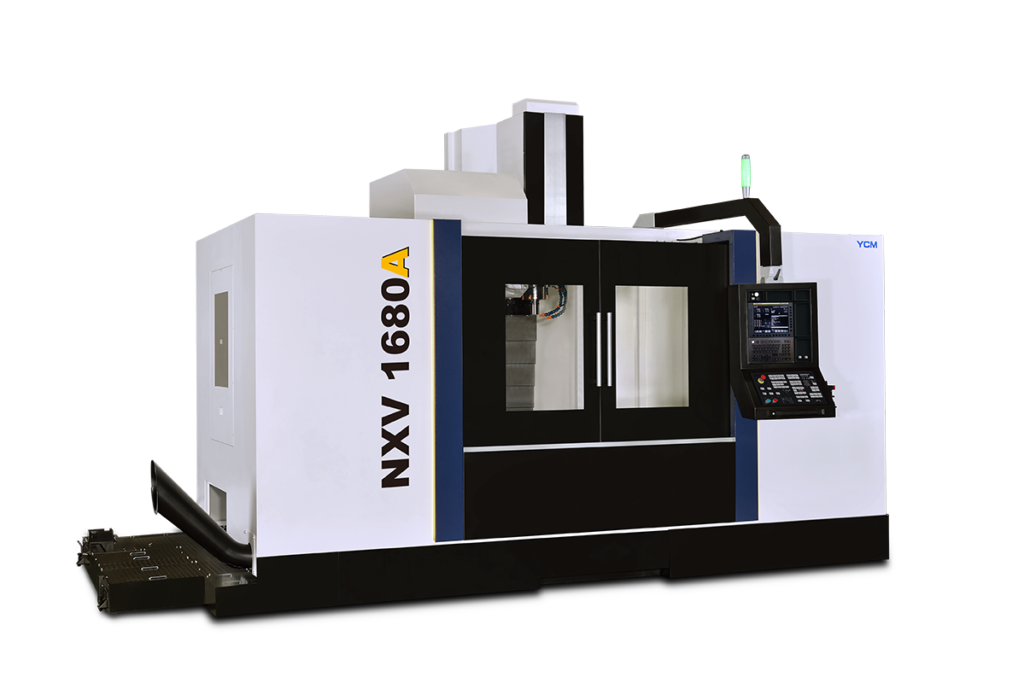
The YCM NXV1680A is a Large-Capacity, High-Performance 3-axis Vertical Machining Center (VMC), built with extended X-axis travel and a heavy-duty table to handle long, heavy workpieces with exceptional rigidity. It is primarily used in automotive, heavy equipment, large die/mold bases, and general manufacturing where combining high spindle speed (for efficiency) with a massive work envelope is a critical requirement.
| Category | Specification | Imperial Value | Metric Value | Operational Insight (What it Means) |
|---|---|---|---|---|
| Work Envelope (Capacity) | X-Axis Travel | 64.2 in. | 1,630 mm | Massive width capacity for extra-long parts (e.g., long fixtures, aerospace components, large plates). |
| Y-Axis Travel | 32 in. | 815 mm | Deep capacity allowing for larger workpieces than standard VMCs. | |
| Z-Axis Travel | 27.6 in. | 700 mm | Excellent vertical clearance for tall parts, deep pocketing, or large fixtures. | |
| Max Table Load | ≈3,300 lbs | ≈1,500 kg | Extremely high load capacity for heavy dies, large steel/iron castings, and multi-part fixturing. | |
| Table Size | ≈68 in.×32 in. | ≈1,730 mm×810 mm | A very large work surface to accommodate the maximum travels. | |
| Power & Speed | Spindle Speed (Max) | 12,000 RPM (Std) | 12,000 RPM (Std) | Maintains high speed even with its large size, ideal for fast aluminum and fine surface finishes. |
| Spindle Power | 25 HP (Std) to 50 HP (Opt.) | 18.5 kW (Std) to 37 kW (Opt.) | High power options ensure the machine can handle heavy, deep roughing cuts across its entire envelope. | |
| Spindle Taper | BBT-40 (Dual Contact) | BBT-40 (Dual Contact) | Provides the rigidity and stability needed for precise machining over the long travels. | |
| Tooling & Efficiency | Tool Capacity (ATC) | 24T (Opt. 30T/48T/60T) | 24T (Opt. 30T/48T/60T) | Adequate capacity, with options to support complex jobs requiring many different tools. |
| Rapid Feedrate | ≈1,181 IPM | ≈30 m/min | Fast rapids for a machine this size, minimizing non-cutting time. | |
| Machine Weight | ≈24,250 lbs | ≈11,000 kg | High weight provides a solid, stable foundation necessary for accurate machining on such long axes. |
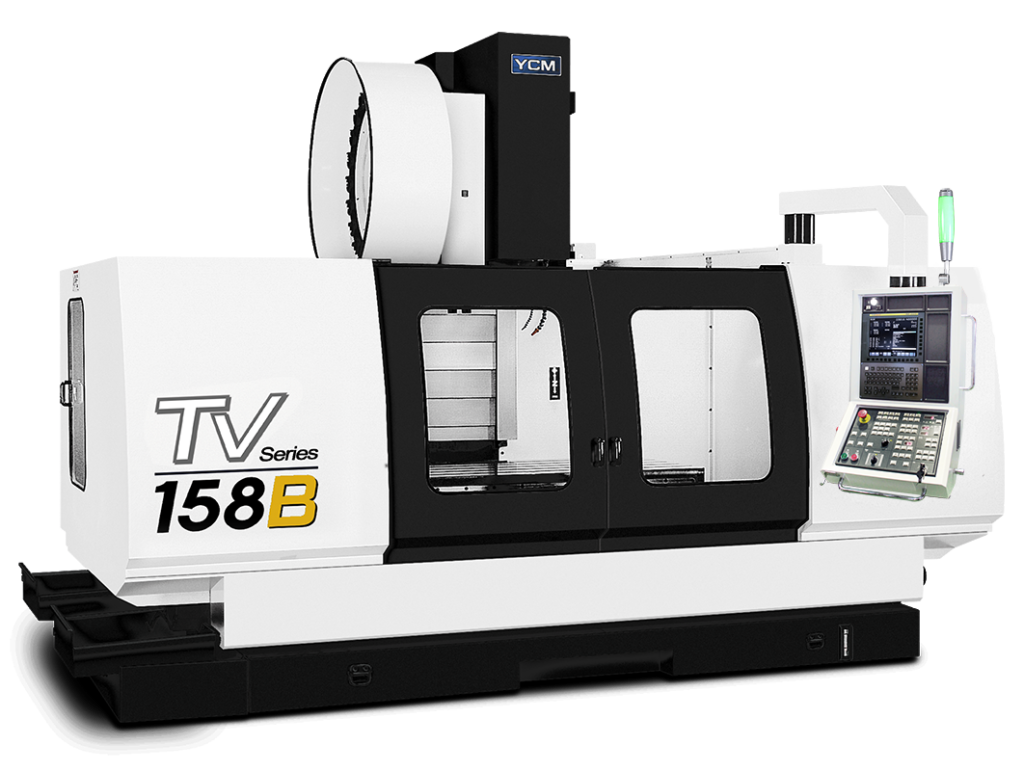
The YCM TV158B is a Heavy-Duty, High-Rigidity 3-axis Vertical Machining Center (VMC) featuring a robust CAT 50 spindle taper and Boxed Ways, engineered for maximum torque and material removal. It excels at aggressive roughing, machining large steel and titanium components, and handling heavy die and mold work in demanding industries like aerospace, energy, and large-scale manufacturing.
| Category | Specification | Imperial Value | Metric Value | Operational Insight (What it Means) |
|---|---|---|---|---|
| Work Envelope (Capacity) | X-Axis Travel | 59.0 in. | 1,500 mm | Very long capacity for large parts, dies, or multiple large fixtures. |
| Y-Axis Travel | 33.8 in. | 860 mm | Significantly deeper capacity than standard VMCs. | |
| Z-Axis Travel | 29.5 in. | 750 mm | Excellent vertical clearance for tall fixtures and deep workpieces. | |
| Max Table Load | ≈4,400 lbs | ≈2,000 kg | Massive load capacity for heavy raw material, steel plates, or large dies. | |
| Power & Torque | Spindle Taper | CAT 50 or BT50 | CAT 50 or BT50 | The defining feature. Larger taper means a larger, stronger connection for maximum torque and heavy cuts. |
| Spindle Speed (Max) | 6,000 RPM (Std) / 10,000 RPM (Opt) | 6,000 RPM (Std) / 10,000 RPM (Opt) | Lower standard speed than high-speed VMCs, but this is a gear-driven spindle built for torque, not just speed. | |
| Spindle Power | 33.5 HP (Standard) | 25 kW (Standard) | High continuous power, coupled with the CAT 50 taper, guarantees high metal removal rates in tough materials. | |
| Structure & Efficiency | Axis Guideways | Boxed Ways (Typical) | Boxed Ways (Typical) | Provides superior damping and rigidity for heavy, continuous cutting and high accuracy under load. |
| Machine Weight | ≈39,600 lbs | ≈18,000 kg | Extremely heavy build to absorb vibration and provide stability during the hardest roughing cuts. | |
| Tool Capacity (ATC) | 24-40 Tools | 24-40 Tools | Standard capacity with options, often handling heavier (up to 44 lb) tools. | |
| Control System | FANUC 32i / Heidenhain | FANUC 32i / Heidenhain | Robust controls capable of handling the high data processing demands of large 3D toolpaths. |
Aluminum is a highly favored material for machining because it features low density, good mechanical strength, excellent thermal and electrical conductivity, and natural corrosion resistance.
6061-T651: Known for its good general-purpose properties, including strength, weldability, and corrosion resistance. It’s often used in structural components.
7075-T651: A high-strength alloy used in aerospace and high-stress applications where strength is paramount.
2024-T351: Valued for its high fatigue resistance and strength, frequently employed in aircraft structures.
| Pros (Advantages) | Cons (Challenges) |
|---|---|
| Excellent Machinability (Easy to cut, allowing for high speeds and quick cycle times) | Stringy Chip Formation (Can lead to chips wrapping around tools, requiring good chip evacuation) |
| High Strength-to-Weight Ratio (Lightweight yet offers substantial strength, especially in alloys like 7075) | Lower Melting Point (More susceptible to warping or thermal deformation at high machining temperatures) |
| Superior Thermal & Electrical Conductivity (Ideal for heat sinks and electrical components; helps dissipate heat from the cut zone) | Soft and Ductile Nature (Some alloys can be prone to burr formation and achieving a smooth finish can be challenging) |
| Excellent Corrosion Resistance (Forms a natural, protective oxide layer) | Lower Hardness than steel or titanium (Less durable for high-wear applications) |
| Readily Available & Recyclable (Often more cost-effective and environmentally friendly than other metals) | Higher Cost (More expensive than materials like steel, especially when factoring in energy for extraction/processing) |
Brass is an alloy of copper and zinc that is highly valued for machining due to its good strength, and resistance to corrosion. The addition of elements like lead (in alloys like C360 Free-Machining Brass) makes it one of the easiest metals to cut, leading to fast cycle times and a clean finish.
C360 (Free-Machining Brass): This is the most common alloy for machining. It contains lead, which causes chips to break cleanly and easily, resulting in an excellent surface finish and long tool life. Used for fittings, gears, and general hardware.
C464 (Naval Brass): Contains a small amount of tin, giving it superior corrosion resistance in marine and high-stress environments.
C260 (Cartridge Brass): Has a higher copper content, providing excellent ductility and strength. It’s often used for components that require cold forming or deep drawing, like electrical connectors.
| Pros (Advantages) | Cons (Challenges) |
|---|---|
| Exceptional Machinability (especially C360, allowing for very fast, low-resistance cutting speeds) | Lead Content (In common alloys like C360, which may be restricted in applications like drinking water components, though lead-free alternatives exist) |
| Low Tool Wear (Easy cutting prolongs tool life and reduces operational costs) | High Material Cost (More expensive than steel or aluminum) |
| Good Thermal & Electrical Conductivity (Suitable for electrical connectors and heat transfer applications) | Lower Strength/Hardness (Generally weaker than steel or high-strength aluminum, limiting its use in high-stress structural parts) |
| Excellent Corrosion Resistance (Especially in alloys like Naval Brass) | Prone to Tarnishing (Requires plating or coating for long-term aesthetic appeal) |
| Aesthetic Appeal (Naturally golden color is desirable for decorative and architectural parts) | Stringy Chip Formation (In alloys without lead, which requires careful chip management) |
Bronze is a copper-based alloy valued in machining for its excellent corrosion resistance (especially to saltwater), wear resistance, strength and low friction properties. Bronze is often used for high-load components that require corrosion resistance, such as marine fittings, bearings and gears.
Tin Bronze (e.g., C90500): A common, all-purpose bronze known for its high strength, good ductility, and wear resistance. It can be challenging to machine due to its toughness.
Leaded Tin Bronze (e.g., C93200 – Bearing Bronze): Contains lead to significantly improve machinability and provide superior anti-friction properties. This is one of the most common alloys for high-speed bushings, washers, and wear plates.
Aluminum Bronze (e.g., C95400): Offers the highest strength among copper-based alloys, as well as exceptional corrosion resistance, especially in marine environments. It is harder and more challenging to machine than leaded bronze.
Phosphor Bronze (e.g., C54400): Contains a small amount of phosphorus, which increases hardness and fatigue resistance. It has good spring qualities and is often used for electrical connectors and diaphragms.
| Pros (Advantages) | Cons (Challenges) |
|---|---|
| Excellent Bearing Properties (Low friction, self-lubricating, ideal for bushings and gears) | High Material Cost (Significantly more expensive than steel or aluminum) |
| Superior Corrosion Resistance (Especially in saltwater and atmospheric environments) | Lower Machinability (Pure/unleaded bronzes are tough and require low speeds, though leaded grades are excellent) |
| High Strength and Durability (Especially Aluminum Bronze and Phosphor Bronze) | Prone to High Thermal Expansion (Requires careful consideration for tight tolerances) |
| Good Electrical and Thermal Conductivity (Useful for some electrical components) | Heavy (Higher density than steel, making it unsuitable for lightweight applications) |
| Aesthetic Appeal (Classic color is desirable for decorative components and statuary) | Potential for Stringy Chips (In non-leaded alloys, requiring good chip control) |
Copper is highly sought after for machining due to its extraordinary thermal and electrical conductivity, making it essential for heat dissipation and electrical components. It also offers good corrosion resistance and ductility.
C11000 (Electrolytic Tough Pitch Copper): High purity, offering the highest electrical and thermal conductivity. It is the most challenging to machine due to its ductility and tendency to form stringy chips. Used primarily for conductors and busbars.
C14500 (Tellurium Copper): The most common free-machining copper alloy. The addition of tellurium causes chips to break cleanly, dramatically improving cutting speed and surface finish with minimal loss of conductivity. Used for connectors, bolts, and plumbing parts.
C17200 (Beryllium Copper): Offers high strength and hardness (comparable to steel) along with good conductivity. It is heat-treatable for high-wear applications, such as plastic injection molds and welding components.
| Pros (Advantages) | Cons (Challenges) |
|---|---|
| Highest Thermal Conductivity (Ideal for heat sinks, exchangers, and cooling systems) | Poor Machinability (Pure copper is soft and forms long, stringy chips that tangle; special alloys are needed) |
| Highest Electrical Conductivity (Essential for electrical contacts, terminals, and busbars) | High Material Cost (One of the most expensive non-precious metals) |
| Excellent Corrosion Resistance (Resists rust and deterioration) | High Ductility and Low Hardness (Pure copper is soft and prone to deformation and burr formation) |
| Ductile and Formable (Useful for bending and shaping after machining) | Tendency to Tarnish (Surface will oxidize and darken over time if not protected) |
| Good Strength (Especially in alloys like Beryllium Copper) | Can be Hazardous to Machine (Beryllium Copper dust requires strict ventilation and safety protocols) |
Steel is one of the most widely used materials in machining due to its exceptional strength, durability, and relatively low cost compared to non-ferrous metals like titanium or copper.
| Pros (Advantages) | Cons (Challenges) |
|---|---|
| High Tensile Strength & Hardness (Ideal for load-bearing and high-wear components) | Lower Machinability (Requires slower speeds, lower feeds, and more rigid setups than aluminum or brass) |
| Excellent Durability & Wear Resistance (Long lifespan in demanding conditions) | High Cutting Temperatures & Forces (Especially with hard or stainless alloys, requiring robust cooling and tooling) |
| Lowest Cost per Pound (Most cost-effective choice for large or heavy parts) | Prone to Rust (Carbon and alloy steels require plating or coating to prevent corrosion) |
| Wide Range of Alloys (Allows tailoring properties like strength, ductility, and corrosion resistance) | Tendency to Work Harden (Especially stainless steel, which requires specific cutting strategies to prevent rapid tool wear) |
| Good Heat Treatability (Properties can be dramatically improved through tempering or hardening processes) | Heavier than Aluminum/Titanium (Not suitable for lightweight applications) |
Titanium is a favored material for machining because of its excellent strength-to-weight ratio, high corrosion resistance, and biocompatibility.
| Pros (Advantages) | Cons (Challenges) |
|---|---|
| Exceptional Strength-to-Weight Ratio | High Cutting Forces (due to high strength) |
| Superior Corrosion Resistance | Rapid Work Hardening during cutting |
| Excellent Biocompatibility (ideal for medical/implants) | Low Thermal Conductivity (causes high heat in the cut zone) |
| High resistance to crack propagation | Accelerated Tool Wear and reduced tool life |
| Low coefficient of thermal expansion | High Material Cost (relative to steel or aluminum) |
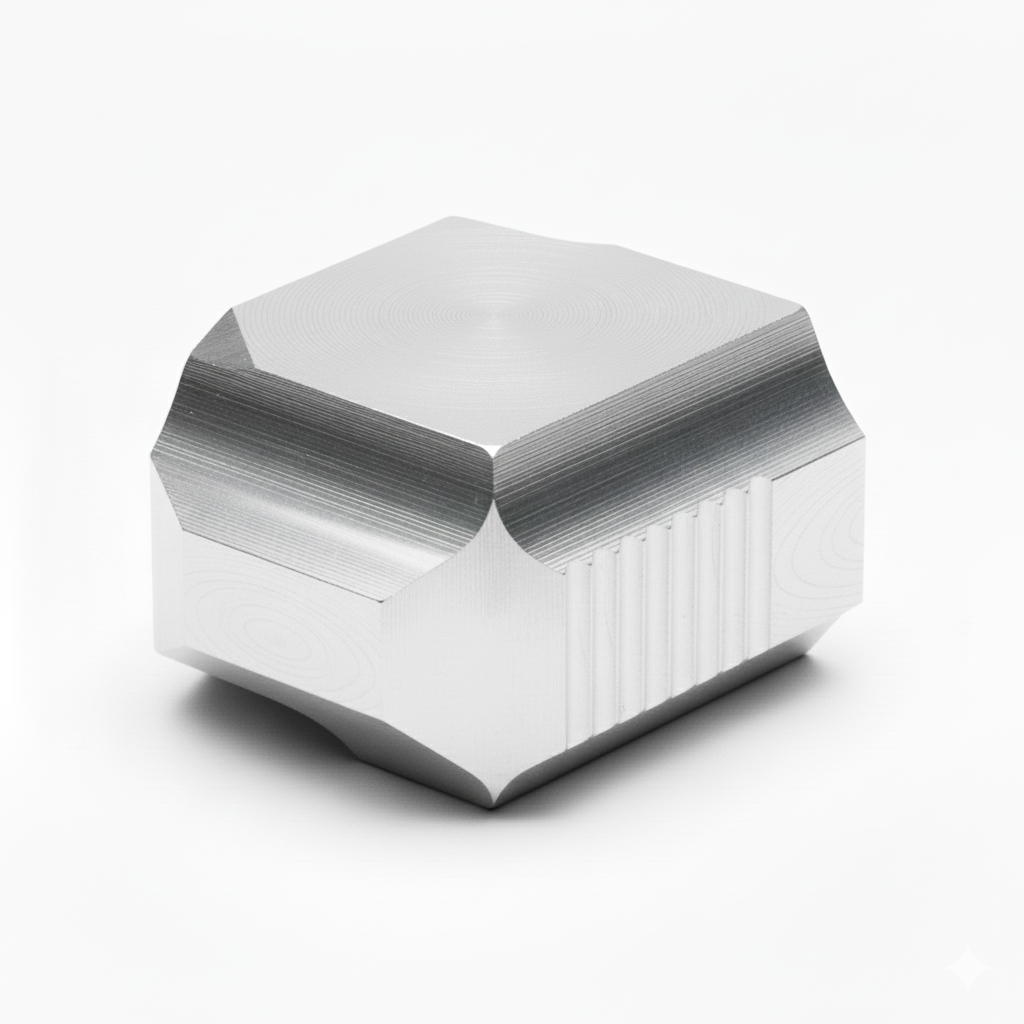
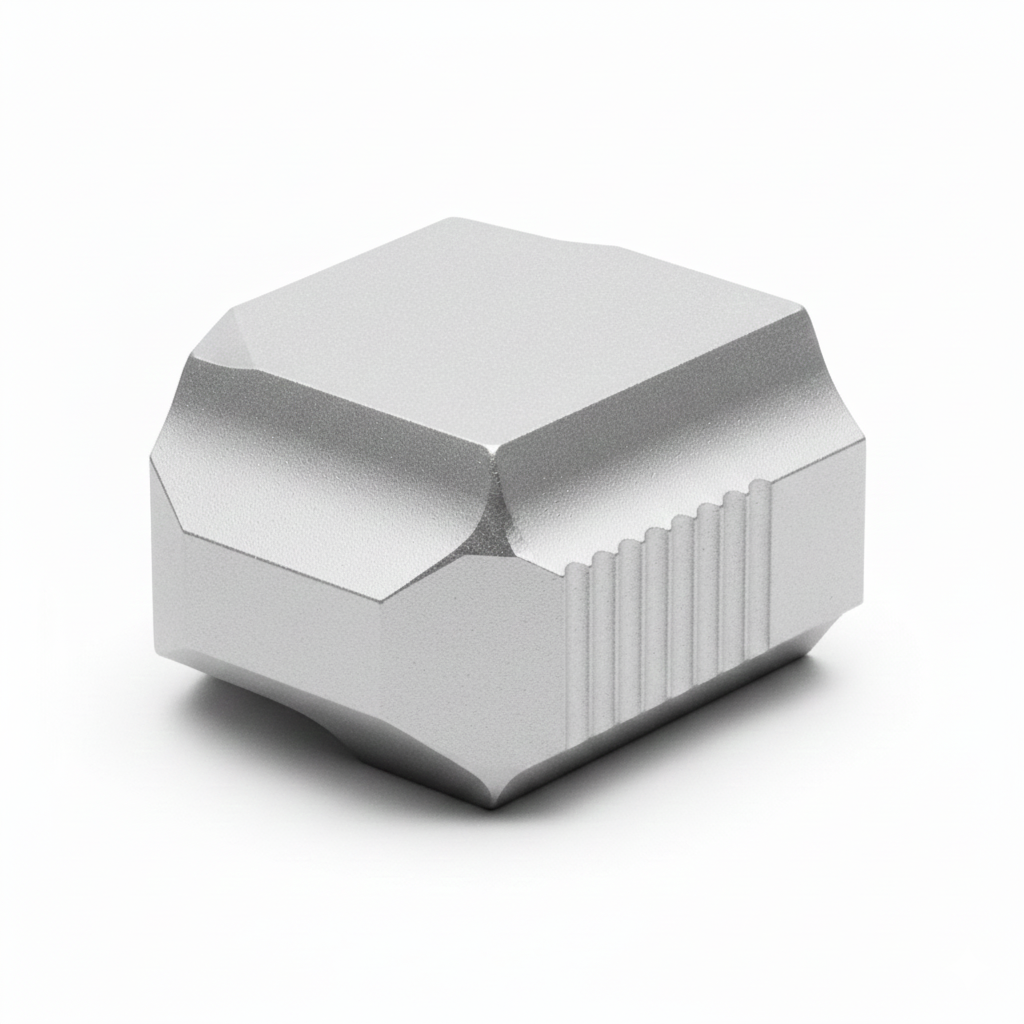
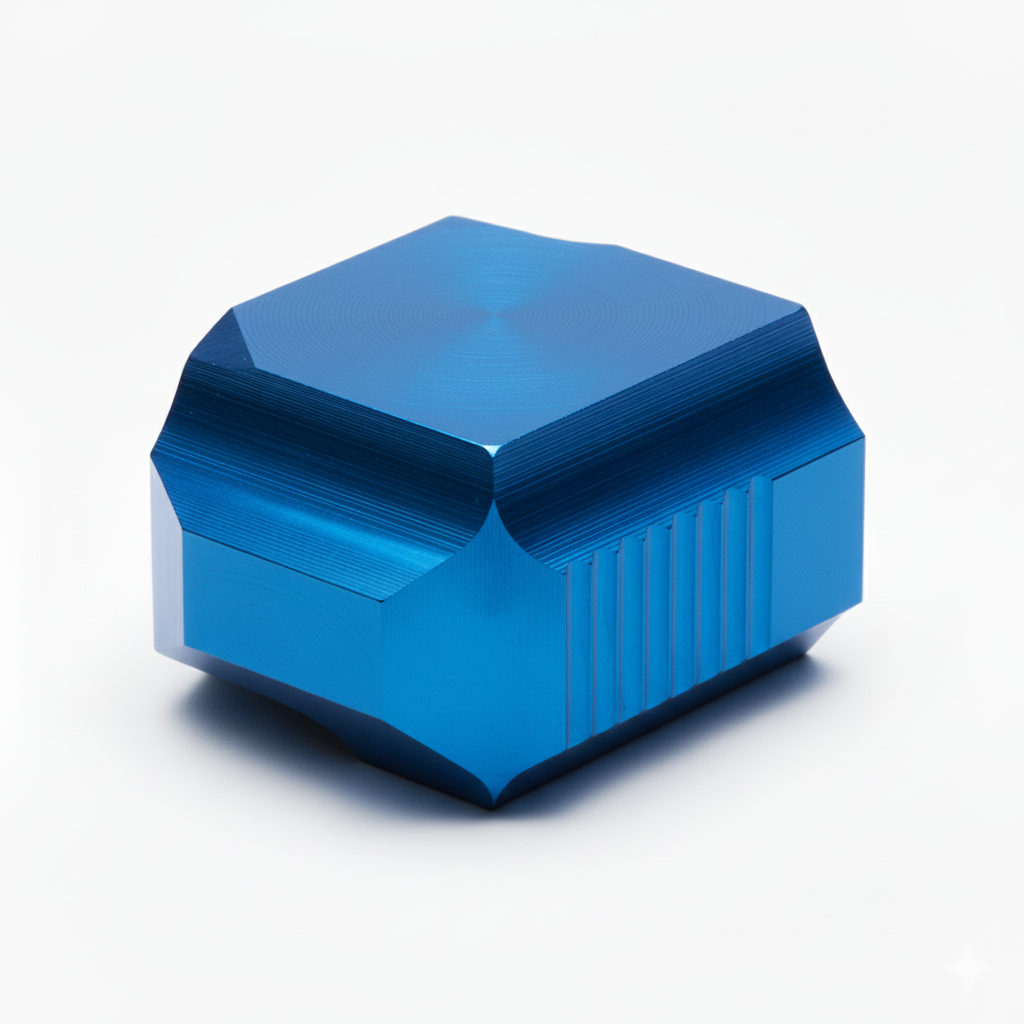
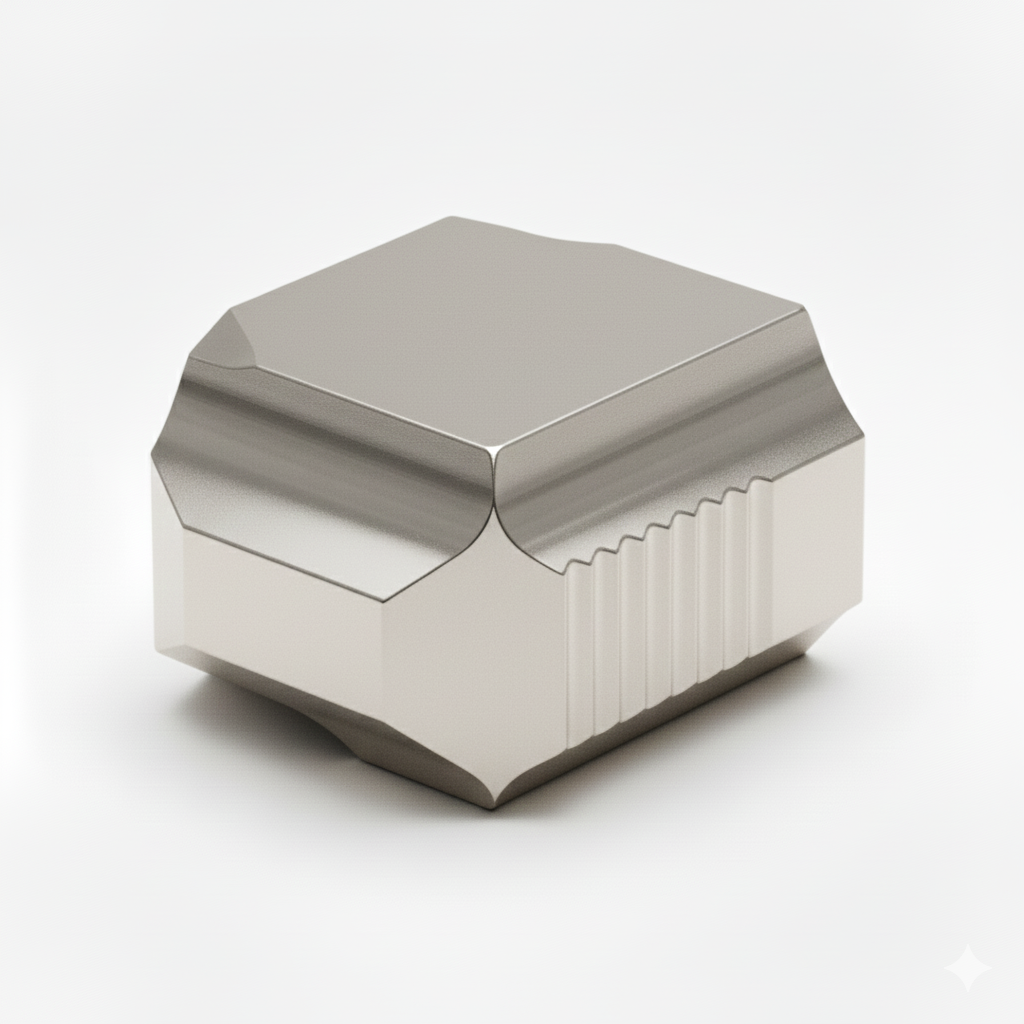
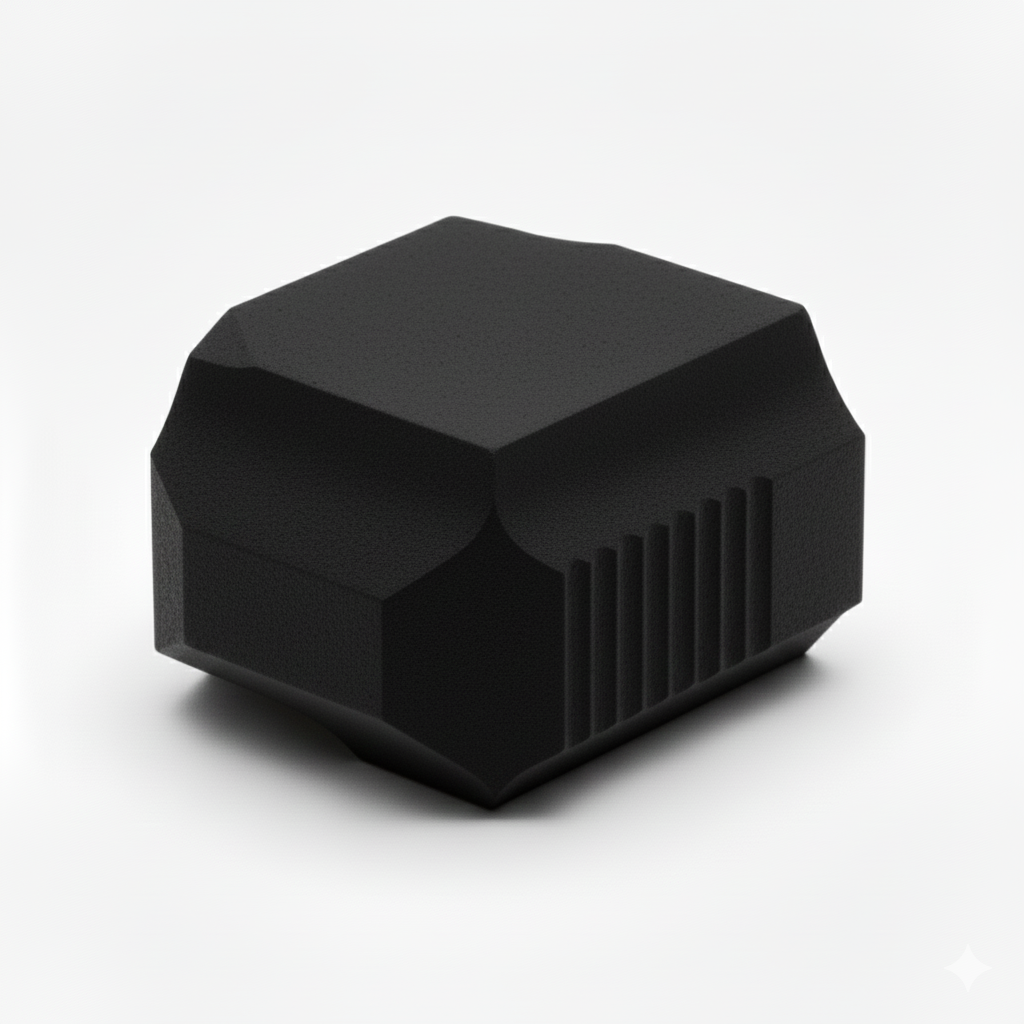
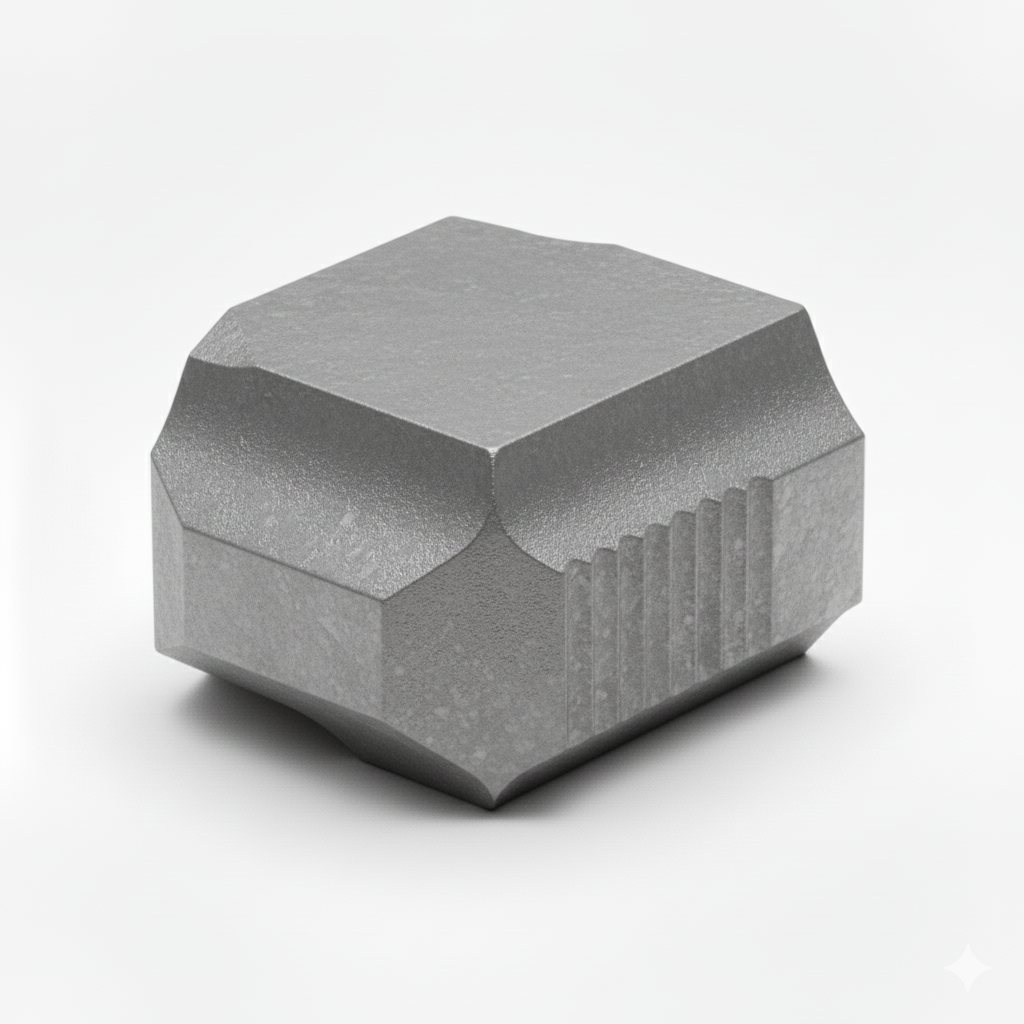
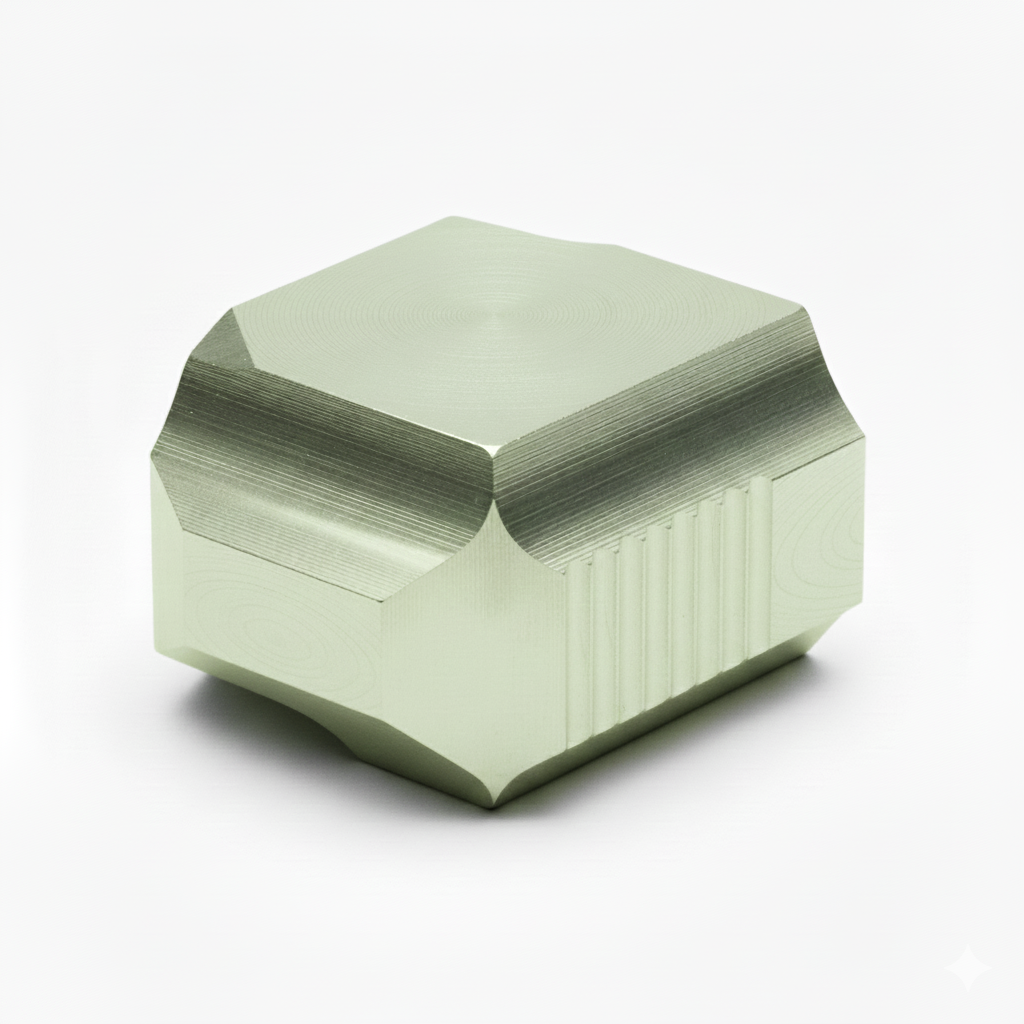
Magnus provides a comprehensive selection of surface finishes for CNC machined components to fulfill all project specifications. More advanced coating and plating options are also available.
Magnus Machining LLC
3206 Pleasant Valley Ln
Arlington, TX 76015
Phone: (972) 641-8888
Email: customerservice@magnusmachining.com
© 2025 Magnus Machining LLC | Privacy Policy & Terms of Service