Precision Digitization
Do you have a physical part but lack the necessary technical drawings or 3D models? Our Reverse Engineering Services provide the critical link between the physical world and the digital manufacturing process. We accurately capture the geometry, dimensions, and specifications of your existing component to create fully functional, usable CAD models.
Reverse engineering is a crucial step in various scenarios across the product lifecycle:
Legacy Part Replacement: Creating CAD models for discontinued or aging components where original documentation is lost or never existed.
Modification and Improvement: Digitizing a part to analyze its structure, identify weaknesses, and implement design upgrades or modernization.
Competitive Analysis: Understanding the design, function, and manufacturing methods of existing products.
Fixture and Tooling Design: Capturing the exact geometry of a component to design custom fixtures, jigs, or molds that fit perfectly.
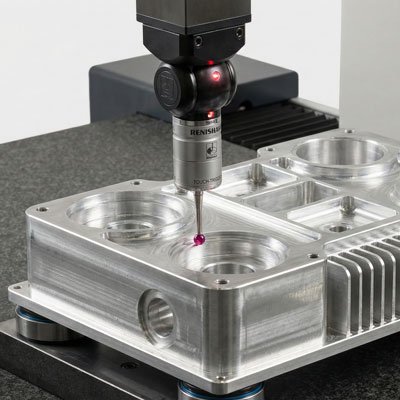
We employ a proven, systematic process utilizing advanced metrology equipment to deliver highly accurate and reliable results. code validation.
We use non-contact 3D scanning technology to capture millions of data points from the physical object’s surface.
Technology: Depending on the part size, complexity, and required accuracy, we utilize structured light scanners or high-precision laser scanners.
Output: The scanning process generates a point cloud—a dense collection of X, Y, Z coordinate data—or a polygon mesh (STL file).
The raw data is cleaned, aligned, and optimized for CAD modeling.
Noise Reduction: Removing erroneous data points caused by surface imperfections or environmental factors.
Mesh Optimization: Creating a clean, watertight surface mesh from the point cloud.
This is the most critical stage, where the mesh is converted into an intelligent, feature-based parametric CAD model.
Parametric Modeling: We fit ideal geometric features (planes, cylinders, spheres, etc.) to the scan data, resulting in a fully editable model, typically following Design Intent.
GD&T Implementation: Applying appropriate Geometric Dimensioning and Tolerancing (GD&T) based on functional requirements or existing assembly interfaces.
Output: Deliverable is a native CAD file (e.g., STEP, IGES, SolidWorks, Inventor) that is ready for manufacturing, simulation, or modification.
The final CAD model is compared against the original scan data to confirm accuracy.
Deviation Analysis: A color-mapped report showing the minute differences (deviation) between the physical scan and the created CAD model, ensuring the modeled part is within acceptable tolerance. (This is the same process as CMM verification, but comparing the created model to the scan data).
Reverse Engineering is particularly valuable when paired with CNC manufacturing:
| Service Advantage | Description |
|---|---|
| Tooling and Wear Analysis | Re-creating models of worn tools to determine wear patterns and design improved, longer-lasting replacements. |
| Custom Part Replication | Quickly generating a model and NC program for reproducing custom, one-off parts without original documentation. |
| Fitment Assurance | Ensuring that components designed to interface with an existing part (e.g., custom adapters) will have a perfect fit. |
Don’t let a missing file stop your production. Our experts are ready to turn your physical assets into digital models that drive your manufacturing processes forward.
Contact us today to discuss your reverse engineering project and tolerance requirements.
Magnus Machining LLC
3206 Pleasant Valley Ln
Arlington, TX 76015
Phone: (972) 641-8888
Email: customerservice@magnusmachining.com
© 2025 Magnus Machining LLC | Privacy Policy & Terms of Service